
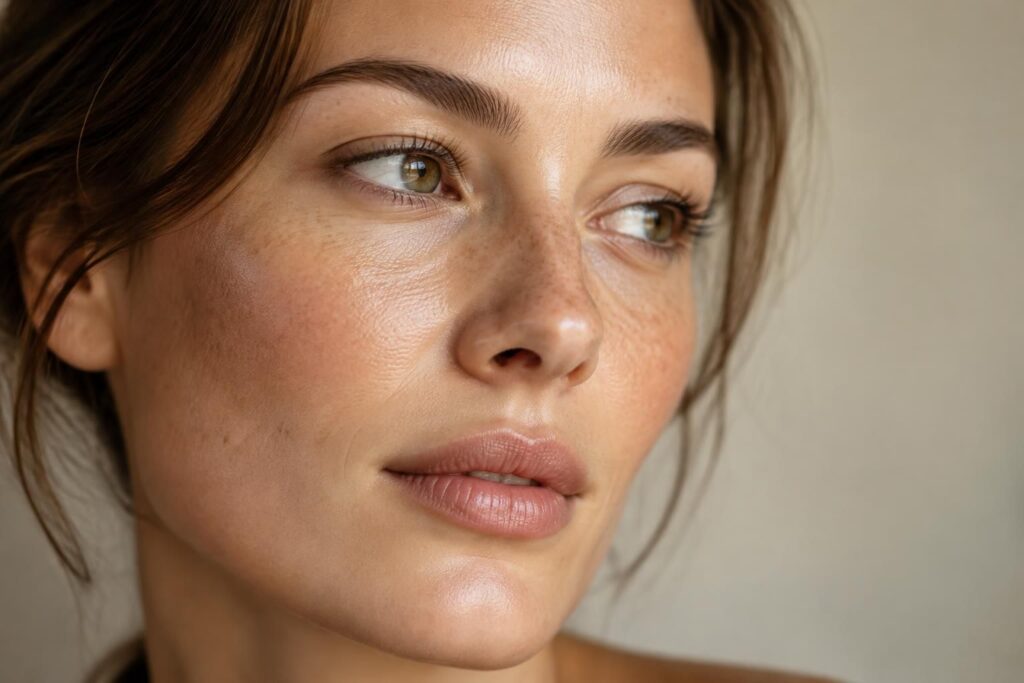
Hello, this is Patrick.
Skin deserves more attention when a mole changes, irritation persists, or its texture changes.
Beyond a glowing complexion and natural makeup, it protects the body and can signal that a change calls for medical advice.
Observe without worrying and protect your skin every day: that’s the right approach.
Good habits for keeping a closer eye on your skin
- Regularly check your moles and existing marks.
- Look out for changes in shape, color, size, or appearance.
- Protect your skin from the sun with clothing, shade, and appropriate sun protection.
- Choose gentle skin care and limit products that irritate or dry out your skin.
- Ask a professional for advice if a mark changes or does not heal.
To better understand your skin’s needs, check out these tips on routines that don’t suit every skin type and the signs to watch for when your skin changes quickly.
Skin: a living protective barrier, not just a beauty concern
Skin forms a barrier against irritants, certain microbes, and water loss. It also helps regulate temperature and contains nerve endings that transmit touch, pain, and changes in temperature.
It is made up of several layers. The epidermis, on the surface, helps protect the body; the dermis contains blood vessels, hair follicles, and fibers that contribute to strength and elasticity. Beneath it, the hypodermis helps insulate the body and cushion certain impacts.
This activity explains why skin texture can vary with age, sun exposure, cold, stress, or overly harsh skin care. Dry skin after a stripping cleanser doesn’t necessarily call for a more complex routine: it’s often better to reduce irritants and return to simple habits.
Moles and freckles: what deserves your attention
Freckles and moles are natural variations in the skin. Their presence alone is no reason to worry. It is mainly a recent or persistent change that deserves attention.
A changing mole, a wound that won’t heal, or a scab that keeps returning in the same place warrant medical advice. These signs alone are not enough to make a diagnosis, but it’s best not to cover them with makeup or treat them yourself.
Pay attention to how it feels, too: lasting itchiness, pain, or worsening irritation are reasons to ask for advice. The goal isn’t to scrutinize every skin imperfection with concern, but to recognize what has changed from the norm.
Adjust your beauty routine without weakening the skin barrier
An effective beauty routine doesn’t need to involve lots of steps. A gentle cleanser, suitable moisturizer, and regular sun protection are a reasonable foundation for many people. However, needs vary depending on sensitivity, age, and living conditions.
Frequent exfoliation and harsh cleansers can weaken the skin barrier. Possible results include tightness, redness, and increased sensitivity. If a new product causes a reaction, stop using it and ask for advice if the symptoms persist.
Natural beauty doesn’t mean giving up makeup or skin care. Rather, it encourages you to choose what suits you, to preserve your skin’s comfort and your self-confidence, without trying to correct every mark.
| What you notice | Helpful response |
|---|---|
| A mole that changes in appearance | Make an appointment with a health professional. |
| Dry or tight-feeling skin after skin care | Cut back on irritating products and choose gentle moisturizing products. |
| A mark or scab that persists | Have it examined rather than covering it up or treating it yourself. |
| Skin exposed to the sun | Combine sun protection, clothing, and seeking shade. |
Three simple steps for responding to a skin change
- Observe. Note what has changed: shape, color, size, raisedness, or duration. A photo taken under similar conditions can help you compare changes over time.
- Protect. Avoid scratching the area or applying an irritating product to it. During the day, protect it from the sun with appropriate measures.
- Ask for advice. If the change persists, worsens, or concerns you, contact a doctor or dermatologist. An examination will help determine what to do next.
Consistency matters more than anxious scrutiny: a few careful checks and daily protection help you care for your skin without turning every spot or imperfection into a source of worry.
Frequently asked questions about skin details
How often should you check your moles?
Regular visual checks can help you spot a change from the usual appearance. If a mark changes or concerns you, ask for medical advice rather than waiting until your next check.
Are freckles cause for concern?
Freckles are common and their presence alone is not a cause for concern. As with any skin mark, however, an unusual or persistent change warrants professional advice.
Is a complete beauty routine necessary?
No. A simple routine suited to your skin may be enough: gentle cleansing, moisturizing, and sun protection. Using lots of products or exfoliating too often can irritate the skin barrier.
When should you see a doctor about a skin imperfection?
See a doctor if a mark changes, a wound does not heal, a scab keeps returning in the same place, or irritation persists. Only a professional can assess it properly.
Thanks for reading! If this topic resonates with you, share your experience in the comments. — Patrick