
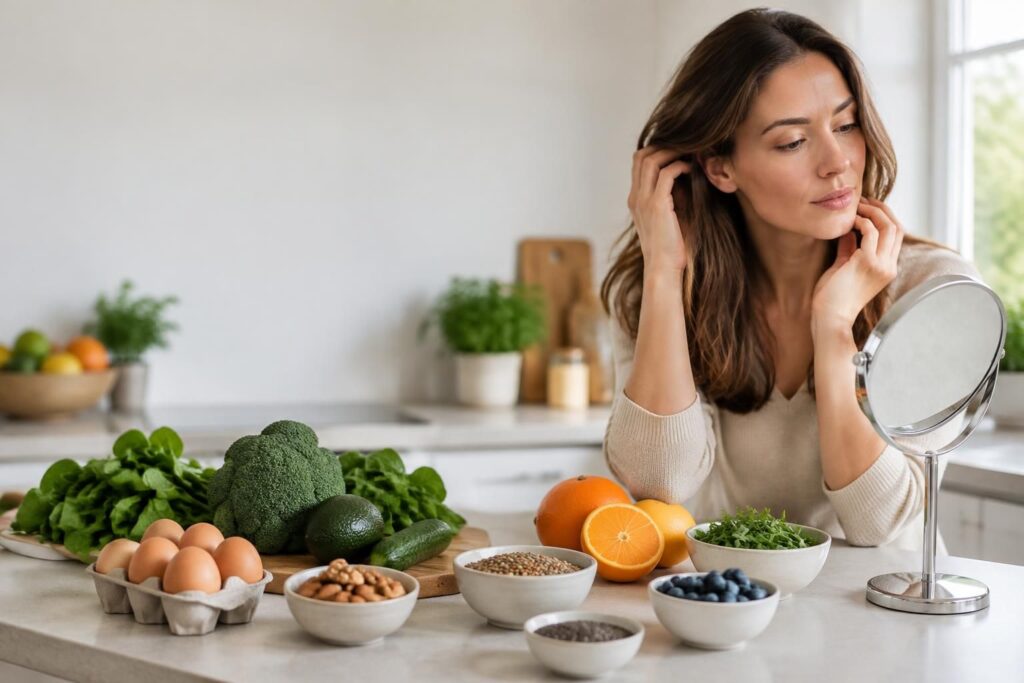
Hi there, it’s Patrick. A nutritional deficiency can contribute to dull hair, less radiant skin or brittle nails, but these signs aren’t enough to make a diagnosis. Diet helps support natural beauty, but it doesn’t replace medical advice when symptoms persist.
Nutritional deficiencies and beauty: steps to take right now
- Vary your sources of protein with eggs, fish, legumes or tofu.
- Add iron-rich foods, such as lentils, beans and meat, depending on your dietary habits.
- Pair plant-based iron with vitamin C: a squeeze of lemon or a piece of fruit can round out your meal.
- Put together varied meals rather than relying on a single food presented as a “beauty food.”
- Ask a healthcare professional for advice if hair loss, fatigue or brittle nails persist.
A balanced diet contributes to nutrition and well-being, but needs vary from person to person. For practical ideas, discover how to put together a simple meal to help prevent deficiencies and these tips for preventing chronic fatigue with your diet.
Hair, skin and nails: signs that don’t point to just one cause
The body doesn’t work with a single “glow” button. Hair health, skin radiance and nail strength depend on many factors: diet, sleep, stress, hormones, age and overall health.
Iron deficiency can be accompanied by fatigue and, in some cases, hair loss. But these symptoms can also have other explanations: immediately attributing them to a lack of nutrients may delay finding the real cause.
Why a nutritional deficiency can show on the outside
Some nutrients play a part in essential bodily functions. An insufficient intake or poor absorption can therefore have an impact, but a single sign doesn’t tell you which nutrient is lacking.
Essential vitamins and minerals are generally obtained through a varied diet. Supplements aren’t automatically more effective: iron supplementation, for example, should address an identified need and be supervised.
| Sign observed | What it may indicate | Reasonable next step |
|---|---|---|
| Persistent fatigue | Several possible causes, sometimes including iron deficiency | Talk to a professional if it lasts or gets worse |
| Increased hair loss | Nutritional, hormonal or medical factors, or stress | Monitor changes and seek advice if it persists |
| Brittle nails | Various causes, not necessarily a deficiency | Avoid self-diagnosis and taking random supplements |
| Less radiant skin | Sleep, hydration, lifestyle habits or health | Look at overall changes rather than seeking a miracle food |
A common mistake: taking supplements to restore your natural beauty
When hair starts to thin or nails split, supplements can seem like a quick fix. But a capsule doesn’t necessarily solve the problem: it may be unnecessary, unsuitable or carry risks depending on the dose and your medical situation.
Imagine Lina, who feels tired and notices her hair falling out. Rather than starting an iron supplement on her own, she writes down her symptoms, reviews her eating habits and makes an appointment: an assessment can help distinguish a deficiency from another cause.
Three steps to take action without guessing
- Take note of changes. Write down when they started, whether they’re getting worse and any other symptoms you’re experiencing.
- Make your meals more varied. Rotate legumes, grains, vegetables, fruit and sources of protein, taking your needs into account.
- Get persistent symptoms assessed. A professional can decide whether tests or an assessment are needed and recommend appropriate care.
This approach is more reliable than choosing a supplement based on an advertising claim. For beauty as well as well-being, it’s better to address a real need than to pile on products “for hair, skin and nails.”
Beauty foods: focus on balance rather than a miracle ingredient
Lentils, chickpeas, leafy greens, eggs, fish, nuts and fruit can all be part of varied meals. None of these foods can, on its own, guarantee glowing skin or thicker hair: their value lies in the overall diet and eating consistently.
Tea and coffee consumed at the same time as a meal can reduce the absorption of non-heme iron in some people. If an iron deficiency is confirmed, a professional can offer tailored advice, including on meal composition and any potential treatment.
Frequently asked questions about deficiencies and beauty
Can iron deficiency cause hair loss?
It can be associated with hair loss, but this symptom has many possible causes. A healthcare professional can determine whether an assessment would be helpful.
Which foods should I prioritize to support hair health?
Aim for a varied diet that includes sources of protein, legumes, vegetables, fruit and grains. No single food can guarantee stronger hair.
Should I take vitamins to get more radiant skin?
Not necessarily. Supplements are useful in some situations, but they don’t replace either a balanced diet or an assessment of a persistent problem.
When should I seek advice about brittle nails or persistent fatigue?
If these signs last, get worse or occur alongside other symptoms, ask a professional for advice rather than diagnosing yourself.
Thanks for reading! I’d love to hear your thoughts in the comments. — Patrick