
Hello, this is Patrick.
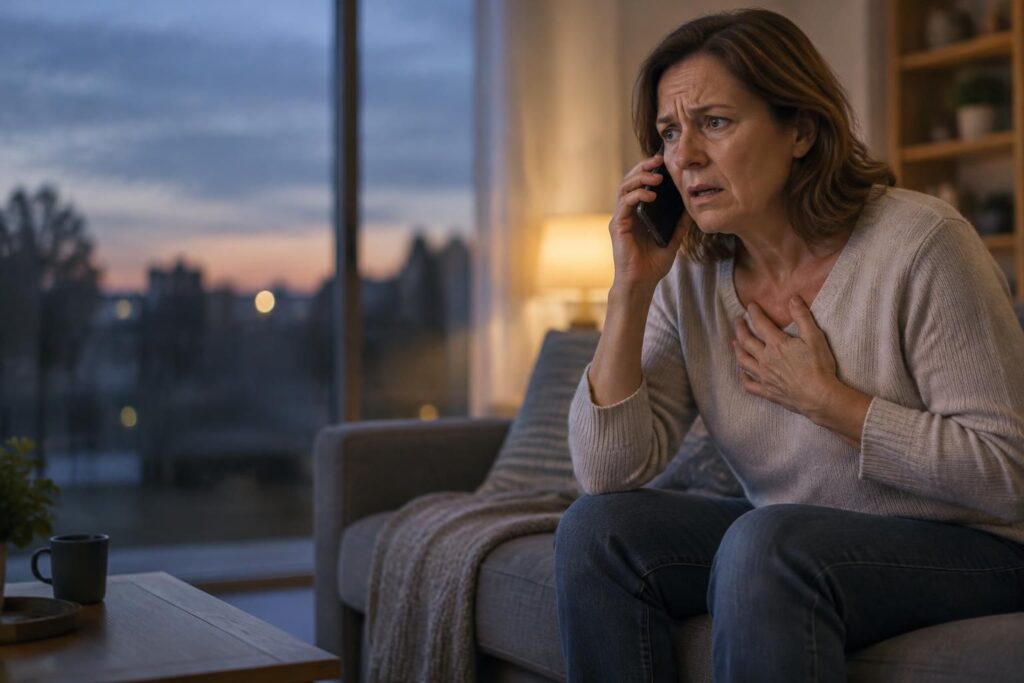
New, severe, or persistent chest pain means you should call emergency services immediately: don’t wait until tomorrow.
Chest pain can have several causes, but certain cardiac symptoms signal a medical emergency. If in doubt, it’s better to get a prompt assessment than to try to diagnose yourself.
What to do right away
- Call 15 or 112 in France if the pain is severe, lasts several minutes, comes back, or is accompanied by other worrying symptoms.
- Describe exactly what you’re feeling, when it started, and give your address to the emergency call handler.
- Stop any physical activity and get into a comfortable position. If possible, don’t stay alone.
- Don’t drive yourself to the hospital, and don’t leave the person alone.
- Don’t take any medication unless a medical professional tells you to; follow the instructions given by emergency services.
To help you spot signs that call for a quick response, you can also read these guides to warning signs and how to recognize a concerning symptom.
Chest pain: the danger is waiting for it to pass
Chest tightness, shortness of breath, cold sweats, nausea, or pain spreading to the arm, back, neck, or jaw can accompany a heart attack. These symptoms don’t always occur together, and their intensity can vary.
On the other hand, not all chest pain is necessarily heart-related. But you can’t reliably tell the difference at home: getting prompt medical attention matters more than trying to self-diagnose.
When should you call emergency services?
Call right away if the pain is new or unusual, lasts for a few minutes, comes back while you’re resting, or is accompanied by faintness, difficulty breathing, or sudden weakness. If the person loses consciousness or is breathing abnormally, tell the emergency call handler immediately and follow their instructions.
| What you notice | What to do |
|---|---|
| Persistent pain or pain that comes back | Call 15 or 112 in France |
| Pain with shortness of breath, sweating, or faintness | Call immediately; don’t wait to see if it improves |
| Brief pain after physical activity that has now gone away | Seek medical advice promptly, especially if the pain is unusual |
This table can help you take action, but it doesn’t replace advice from emergency services. If the situation seems serious to you, calling is the right thing to do, even if you’re unsure of the cause.
Three steps to respond effectively
- Call. Give the exact address, describe the symptoms, and say when they began. Don’t hang up until the professional tells you to.
- Keep the person safe. Ask them to stop what they’re doing and stay calm. Loosen any tight clothing and, if possible, ask someone to open the door for the emergency responders.
- Observe and report. Report any worsening symptoms, loss of consciousness, or change in breathing. Gather their regular medications and any useful information, but don’t delay the call.
For example, if someone feels pressure in their chest on arriving home and becomes short of breath, don’t wait to see whether a night’s rest will be enough. When it comes to cardiovascular health, the right decision is to let emergency services assess the situation.
Frequently asked questions about chest pain
Does chest pain that goes away still require a call?
If it was severe or unusual, came back, or was accompanied by shortness of breath, faintness, or sweating, call emergency services. Temporary relief isn’t enough to rule out a serious cause.
Should I drive to the emergency department?
No, don’t drive yourself if a heart problem is possible. Call 15 or 112 in France and follow the instructions you’re given; emergency services can arrange appropriate care.
What symptoms can accompany a heart attack?
Chest tightness or pain can be accompanied by shortness of breath, cold sweats, nausea, faintness, or pain in the arm, back, neck, or jaw. Symptoms vary from one person to another.
What should I do if I’m unsure how serious it is?
Call 15 or 112 in France and describe the symptoms. The emergency call handler will assess the situation and guide you; don’t delay the call to look for an answer online.
I hope you’ve found this advice helpful. See you soon! — Patrick