
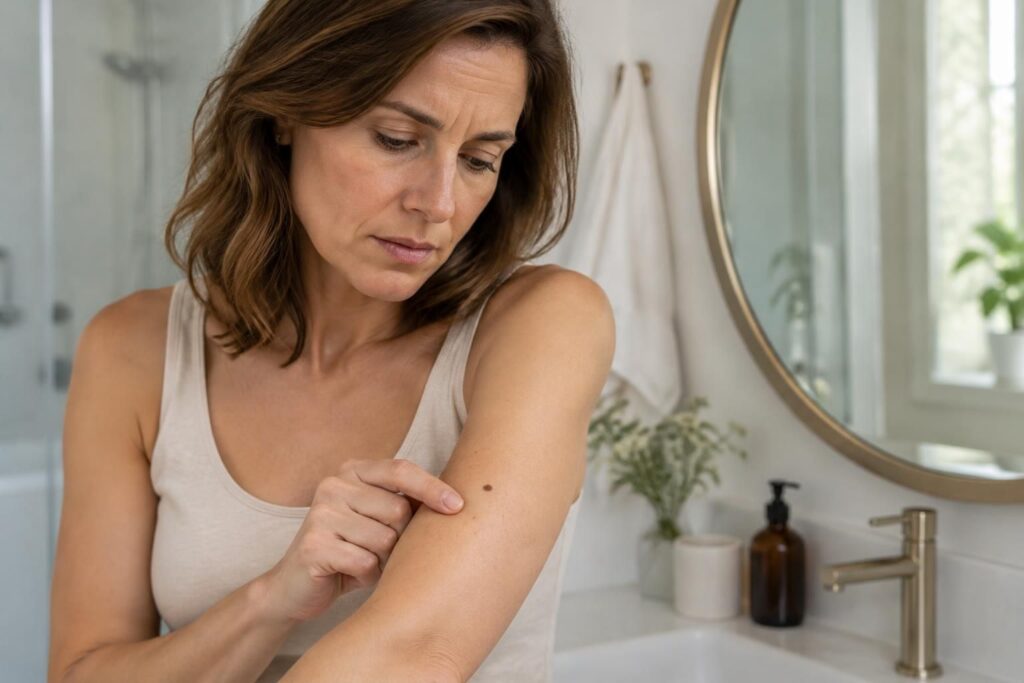
Hello, this is Patrick. A skin change isn’t always just cosmetic: if it persists, gets worse, or comes with other symptoms, it’s best to seek medical advice.
Redness, itching, or a new spot can have a variety of causes, sometimes harmless and sometimes worth monitoring. The important thing is not to hide an unusual sign beneath a new beauty routine.
What to do right away
- Note when the skin change appeared and how it develops.
- Take a photo in similar lighting so you can compare its appearance.
- Temporarily stop using any recently introduced products if they irritate your skin.
- Avoid scratching, popping, or treating the area with a harsh product.
- Arrange a medical consultation if the problem persists, spreads, or becomes painful.
Skin health also depends on having a suitable routine: sensitive skin doesn’t necessarily react the same way as someone else’s, as this article explains about the risks of copying a beauty routine. If you’re unsure which of several products to choose, it’s best to avoid the overload described in this guide to a skincare routine that wears your face out.
A change in your skin deserves more than a cover-up
A common pitfall is to cover a mark or redness with makeup, then pile on more skincare products to make it disappear. But a fragranced product, an exfoliant, or an active ingredient your skin doesn’t tolerate well can make the irritation worse.
For example, if someone notices patches after switching cleansers, they can stop using the product and monitor how things develop. This precaution doesn’t replace a dermatological diagnosis, but it can help identify a possible trigger.
Recognizing skin symptoms that warrant medical advice
A mild reaction may sometimes subside after stopping an irritating product. However, a lesion that changes rapidly, bleeds, becomes very painful, spreads, or comes with a fever warrants prompt evaluation.
The table below can help you choose what to do, but it doesn’t replace an examination by a professional.
| Observation | What to do |
|---|---|
| Redness that appeared after using a new cosmetic | Stop using the product and monitor how it develops |
| Persistent itching or spreading patches | Make an appointment with a healthcare professional |
| A lesion that changes, bleeds, or becomes painful | Seek a medical consultation promptly |
| Sudden facial swelling or difficulty breathing | Contact emergency services right away |
Prevention: choosing skincare without rushing
Prevention involves simple steps: introduce only one new product at a time, follow the directions for use, and avoid combining active ingredients if your skin reacts easily. A short routine also makes it easier to identify a product your skin doesn’t tolerate well.
Responsible beauty isn’t about following every trend; it’s about taking your needs into account and not dismissing an unusual sign. Taking care of your appearance can support your well-being, as long as it doesn’t delay a necessary evaluation.
Three steps to respond methodically
- Observe: note its appearance, when it first appeared, and any changes, without touching the area.
- Simplify: pause any new cosmetic products and stick to gentle products you already tolerate.
- Seek advice: consult a medical professional if the sign persists, changes, or worries you; in the event of a severe reaction, seek urgent help.
This approach helps you take action without panicking or confusing beauty advice with a diagnosis. A lasting change deserves appropriate attention, not just a concealer.
Frequently asked questions about skin changes
When should I consult a professional about a new spot?
Consult a professional if it changes, changes shape or color, bleeds, becomes painful, or if its appearance worries you. A professional can determine whether an examination is necessary.
Should I stop using all my beauty products?
Not necessarily. If irritation occurs after introducing a product, pause that product and avoid adding other new ones. If the reaction is significant or persistent, ask a professional for advice.
Can a photo replace a dermatological diagnosis?
No. Photos taken under similar conditions can help track changes, but they don’t replace an examination or the advice of a healthcare professional.
Which signs require urgent help?
Sudden swelling of the face or tongue, difficulty breathing, or a rapidly worsening reaction requires contacting emergency services.
I hope you found these tips helpful. See you soon! — Patrick