
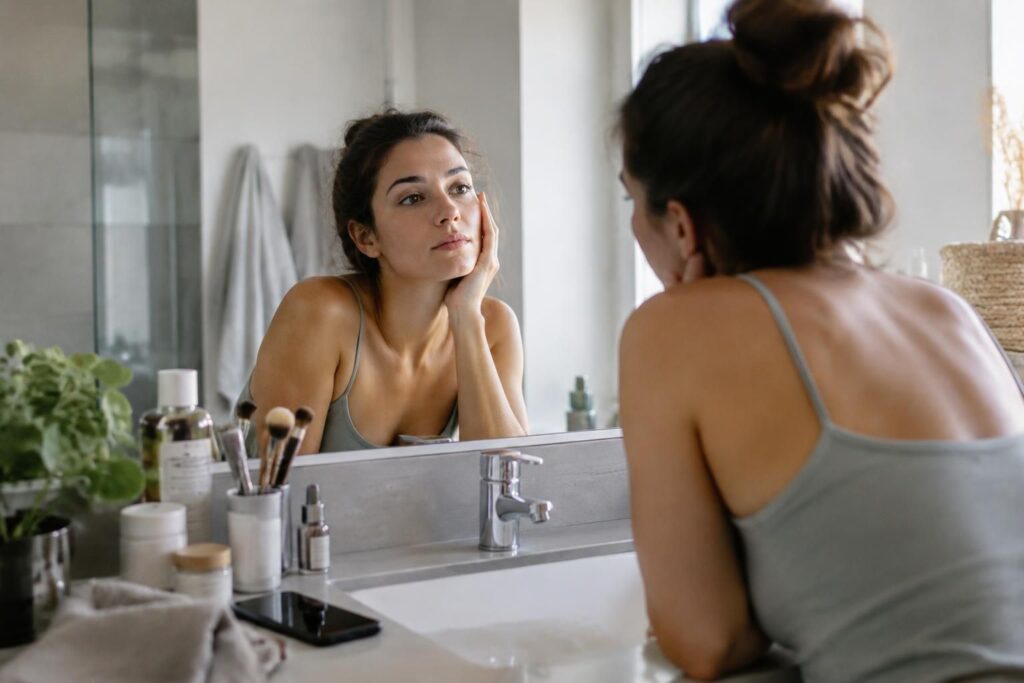
Hi, it’s Patrick. Yes, beauty obsession can fuel more self-doubt: to take back control, limit comparisons and choose your skincare based on your actual needs. Social media often shows filtered, repeated, carefully staged images. Over time, they can affect self-image, self-confidence and psychological well-being.
Things to do right away
- Take a few days off from accounts that trigger insecurities.
- Hide beauty filters when you take a photo.
- Before making a purchase, write down the specific need the product is meant to address.
- Keep your routine short: a few suitable products are better than accumulating them.
- Talk about your doubts with someone you trust if they’re taking up too much space.
Social pressure doesn’t come only from images: it also takes hold when a particular appearance seems to become the norm. To understand how this works, you can read why our society focuses so much on appearance and learn how beauty standards affect mental health.
Why beauty obsession seems stronger today
Beauty standards have always changed across different eras and cultures. But today, social media shows idealized faces and bodies all day long, often without revealing the retouching, lighting or chosen poses.
So the problem isn’t just the time spent in front of a screen. Repeatedly comparing yourself with an unattainable ideal can make you think your own face needs fixing. Even when you know an image is filtered, it’s still easy to compare yourself to it.
From ideal images to personal doubts
A beauty routine video may seem harmless. Yet when it always shows smooth skin, an even complexion or an athletic body, these traits can eventually seem ordinary and essential.
Filters reinforce this impression: sometimes they change how you perceive details you hadn’t noticed before. What you should take seriously isn’t the pleasure of taking care of yourself, but the feeling that you can no longer go out or show yourself without fixing something.
Beauty, comparison and social pressure: what changes
Physical appearance can also influence how a person is welcomed, judged or listened to. Some research on “beauty privilege” describes social advantages given to people considered attractive, but this doesn’t mean their lives are free of pressure or discrimination.
Beauty then becomes a collective issue: it can open doors for some, while reinforcing the exclusion of those who don’t fit dominant beauty standards. Insecurities therefore aren’t simply a matter of vanity; they’re also fueled by how others see us and by shared representations.
| What you notice | What it can lead to | A practical response |
|---|---|---|
| Frequent comparisons with retouched faces | Doubts about your appearance and lower self-confidence | Reduce the number of accounts that trigger this reflex |
| An impulsive purchase after a promotional video | A buildup of products and unnecessary spending | Wait a day before ordering |
| Persistent dissatisfaction despite skincare | Worry that spills over into daily life | Talk to a healthcare professional if it persists |
How to take back control without giving up skincare
Taking care of your appearance can still be enjoyable. The difference lies in your intention: choosing a skincare product for comfort or skin health isn’t the same as making a purchase out of fear that you’re not good enough.
A three-step method for easing comparisons
- Step 1: identify the trigger. After visiting an account or watching a video, ask yourself whether you feel inspired or diminished. This helps you distinguish enjoyment from pressure.
- Step 2: curate your feed. Unfollow or hide content that regularly triggers insecurities. Add more diverse voices and images instead of waiting for the algorithm to do it for you.
- Step 3: set your own standard. Choose a simple goal, such as comfortable skin or an easy-to-maintain routine. Avoid making an important appearance-related decision in a rush or after comparing yourself with others online.
Two situations that call for different responses
If it’s a passing desire: enjoy makeup or skincare, but give yourself some time before making any major purchase. A desire that lasts beyond that waiting period is often more of a personal choice than an impulse.
If it’s a worry that comes back every day: talk to a doctor or psychologist, especially if it affects your outings, relationships or mood. Asking for help isn’t overreacting; it’s taking care of your psychological well-being.
Can beauty make more room for diversity?
Yes, provided we stop treating a single face or body as a universal reference point. Body neutrality and body diversity trends remind us that a person doesn’t have to love every detail of their appearance in order to respect it.
A useful guideline: if content makes you feel that you absolutely have to buy, fix or hide something, take a step back before acting. Skincare can support well-being; it shouldn’t become the price you have to pay to feel worthy.
Is social media responsible for insecurities?
It can reinforce comparisons, especially when content often shows filtered images or very narrow standards. The effect varies depending on the person and the content they view.
How can you tell if skincare is becoming an obsession?
Ask yourself whether skincare remains an enjoyable choice or whether it takes up a lot of time, money and energy, along with persistent worry about your appearance. If it interferes with your daily life, talk to a professional.
Do you have to quit social media completely?
Not necessarily. You can start by adjusting your feed, hiding accounts that trigger comparisons and taking breaks when you feel you need them.
How can you build self-confidence in the face of beauty standards?
Expand the range of people you follow, choose skincare based on your actual needs and remember that online images show only a curated version of reality.
Thanks for reading; best wishes, Patrick P.S. Please leave me a comment at the bottom of the page, thanks